
Ofsted Inspection Updates
Ofsted has updated the way nurseries are inspected from 2025, with clearer report cards that show simple grades alongside short explanations of what each setting does well and where it can improve.
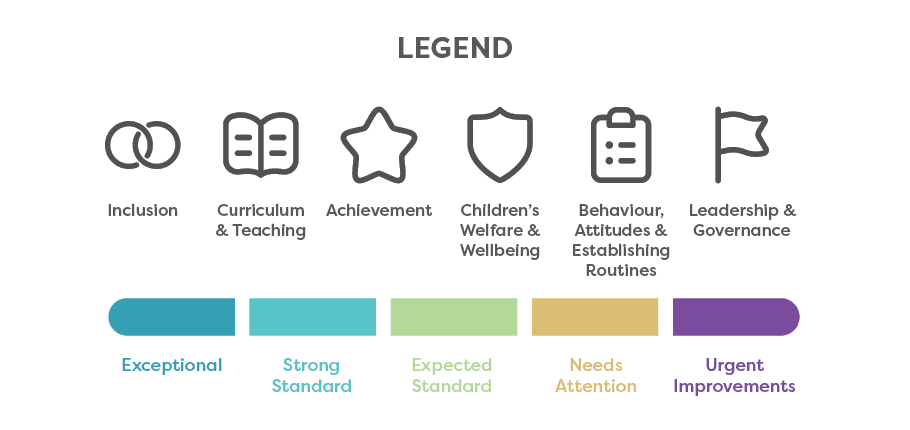
Nurseries are now graded on a five-point scale, Exceptional, Strong Standard, Expected Standard, Needs Attention and Urgent Improvement, across key areas such as teaching, early years care, children’s progress, inclusion, leadership, wellbeing, and behaviour.
Timperley’s New Ofsted Report
Monkey Puzzle Timperley’s most recent Ofsted report was published in February 2026, confirming that safeguarding standards were fully met and children’s safety and wellbeing remain a top priority. The nursery achieved Strong Standard across four key areas of inspection, alongside Expected Standard in two areas, reflecting the high-quality care, learning and support provided by the team. Parents and carers can read the full Ofsted report here to learn more about the inspectors’ findings.
New Ofsted Report

What Ofsted Highlighted
Children’s Welfare and Wellbeing – Strong Standard
Leaders and staff consistently prioritise children’s welfare and wellbeing, supporting those with medical needs and encouraging independence through daily care routines like toileting and handwashing. The key-person system is a strength, with staff knowing children well, helping them understand and manage their emotions, and using familiar books to guide conversations. Children’s understanding of healthy living is promoted through home-cooked meals, gardening, and positive mealtime experiences, with staff fostering good manners and ensuring that children with allergies can fully participate.
Achievement – Expected Standard
Children make strong progress from their starting points, supported by leaders who prioritise language development and positive relationships that build secure foundations. They confidently express ideas, play cooperatively, and develop an understanding of different cultures through experiences such as visiting a local Chinese bakery. Children are well prepared to transition between rooms and to primary school, showing perseverance and a “can-do” approach. Those with special educational needs or English as an additional language make steady progress in social, language, and learning skills.
Behaviour, Attitudes and Establishing Routines – Strong Standard
Leaders have high expectations for children’s behaviour and provide staff with training to promote a positive, respectful culture. Staff use clear, consistent guidance, age-appropriate explanations, and redirection to support children, who are listened to and encouraged to express their views. Strong key-person relationships and consistent routines foster care, affection, and independence, while staff work closely with parents to support daily attendance. Children demonstrate resilience, collaborate well, and approach new challenges with a confident, “can-do” attitude.
Curriculum and Teaching – Expected Standard
The curriculum is well designed to support children’s development across all areas of learning, with staff planning activities based on children’s starting points and ongoing assessments. Children are encouraged to explore, make connections, and develop skills in language, mathematics, and emotional understanding through engaging, hands-on experiences. Leaders monitor and support teaching quality, providing targeted training, such as enhancing language development. While the indoor curriculum is strong, outdoor learning could be further enhanced, as children are sometimes less engaged due to fewer staff interactions.
Inclusion – Strong Standard
Leaders and staff are highly committed to supporting children with SEND, creating an inclusive environment where every child feels a strong sense of belonging. They quickly identify individual needs and provide tailored, ambitious learning plans, including one-to-one support and activities aligned with children’s interests. Barriers to learning are removed through targeted strategies, such as using cue cards, home-language support, and adapting for medical needs. Staff collaborate closely with parents and external agencies, supported by robust training, ensuring all children can participate fully and thrive.
Leadership and Governance – Strong Standard
Leaders have fostered a culture of inclusiveness and continuous improvement, empowering their team and setting high expectations for staff development through clear action plans, coaching, mentoring, and targeted training. They work closely with parents to support children’s learning and transitions, and consistently reflect on the needs of the children and community to remove barriers to learning. Leaders also have a broader vision to collaborate with local early years providers, sharing resources and good practice, exemplified by plans for a joint community sports day.
What it’s like to be a child at Monkey Puzzle Timperley
Children thrive in the setting, where strong, secure relationships are at the heart of learning and care. They are happy, safe, and settled, developing confidence, a sense of belonging, and the ability to play and collaborate well with others. Staff share regular updates with parents and actively involve them in learning, including reading and celebrating events together. Children benefit from an ambitious, well-planned curriculum tailored to their individual starting points, supporting language development, communication, and problem-solving skills, and promoting curiosity, resilience, and a positive “can-do” attitude. Staff encourage independence, positive behaviour, and effective hygiene, while outdoor and sensory experiences foster physical development, exploration, and understanding of the natural world. Leaders provide clear guidance, model high expectations, and support continuous staff development, creating an inclusive, reflective culture that removes barriers for children with SEND or those learning English as an additional language. Children’s progress is further enhanced by strong partnerships with parents, proactive monitoring of teaching, and a vision to collaborate with the wider early years community to share good practice and resources.